It’s finally summer around here! I know that many states and districts start and end school earlier, but I grew up starting classes after Labor Day and graduated around June 22. Since that’s what I’m used to, my daughter finished kindergarten mid-June and we finished up her science book and went to the zoo on July 4! Even if our homeschooled kids get our direct attention and more one-on-one support than is usually feasible for public school teachers, we still have to contend with the “summer slide.” Here are some fun summer learning ideas to help your little learners maintain their knowledge through any size break from schooling you may take.
Spend Intentional Time Outdoors
My kids love going outside in the yard to swing, slide, or play in their “treehouse”, or use sidewalk chalk or blow and chase bubbles out front. Most of these activities are child-led and a lot of fun, but there are ways to add in hidden (and not-so-hidden) learning opportunities to your times outside.
Instead of just going outside and staying in one place, try taking a nature walk. It may be an area you visit a lot or it may be a new area, but you will usually see new things on each walk. Talk about the bits of nature you see. Take pictures of the flowers and trees so you can try to identify them later. Listen for birds or animals, watch for plants or shadows, or maybe talk about the weather and the difference between walks when it’s sunny, rainy, snowy, or overcast. Look for shapes, colors, letters, animal tracks, and more. Don’t be afraid to pick up small items to bring home to create nature crafts, but avoid grabbing feathers in the United States (there are laws against it in the Migratory Bird Treaty Act – check it out before you take any bird feathers home).
Take Grocery Store Games to the Next Level
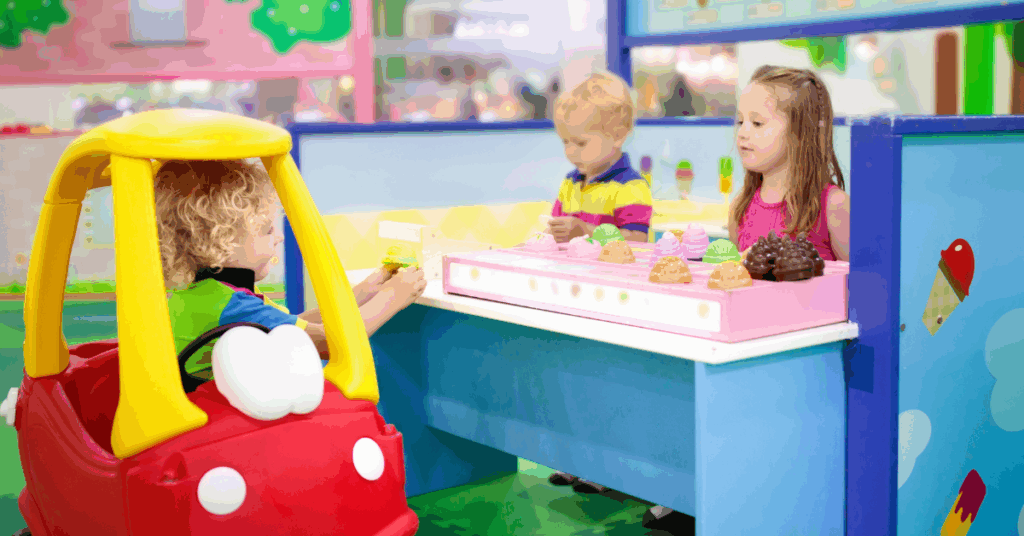
My kids love to play games where they have ice cream, cars, food, or just toys in general for sale. Although my son (he’s almost 3) loves to say everything is “1-2-3 dollars,” my daughter is old enough to understand money better and do simple math.
A fun summer learning idea is to turn this game into math practice. Instead of getting one toy or food item, ask for two things and the price of each item. Then ask your child for the total. If your child is learning multiplication, ask for several of one item so they can multiply to find the total. If you want to work on subtraction, just ask for change. Kids can learn to use or practice using a calculator too.
Grocery games are also great for practicing social skills. People in sales are usually happy, smiling, and speaking clearly, each worthwhile for kids to practice. They can also practice taking turns, stocking shelves (putting toys away), or you could challenge them by asking for something they don’t have to see how they respond.
Cooking or Baking
Math skills will definitely be put to work if you cook or bake with your kids. But I think my kids like how it’s all scientific. You mix specific ingredients together, add heat, and voilà! It’s just like an experiment.
When my daughter was smaller, she only helped with pouring and carefully mixing the ingredients that I measured – my son does this now. But now that she’s bigger and has been learning to read, she’ll be able to practice reading recipes. She can also help measure ingredients – I’ll still double-check for accuracy for a while since she’s only 5, but I know she’ll love being more involved.
Family Read-Aloud
I’ve been reading to my kids since they were each in my belly, but we haven’t had much success with chapter books yet (The Neverending Story has never ended and The Wild Robot hasn’t made any friends), though we’ve made a lot more progress with our children’s Bible since each page is a different story. I think this summer is the perfect time to remedy our trouble with read-alouds. I think our problem is that bedtime is better for picture books and Bible stories at this age (for my kids, maybe not for yours), so I need to do our read-aloud during the day.
The first step is picking a book that works for your family. For some, that can be based on parent interests (I think my dad read Jonathan Livingston Seagull to us when we were kids) or kid interests (my daughter was very interested in The Wild Robot when the movie came out). You can specifically look for books with learning opportunities (like Little House on the Prairie to learn about life in the past) or ask a librarian or go online for recommendations.
The next step is to find a time that works for your family. I heard someone mention that her husband reads aloud to the kids in the morning before he goes to work. Are your kids likely to listen while having breakfast? Or would it be better after breakfast but during morning basket time? Maybe they’d be able to pay attention better mid-morning while coloring related pictures that you print up or coloring books? Then there’s always the afternoon. Pick a time where you can be consistent, but try to also have a time limit or page limit set… I know I’ll just keep going if I don’t!
Don’t forget to ask questions to find out if your kids are enjoying, processing, and understanding the book. Give them a chance to pretend they’re a part of the story and find out what they’d do next. Then see if they’re predictions were correct. Your kids may be inspired to write or act out their own stories. I would definitely encourage that.
Summer Scrapbook
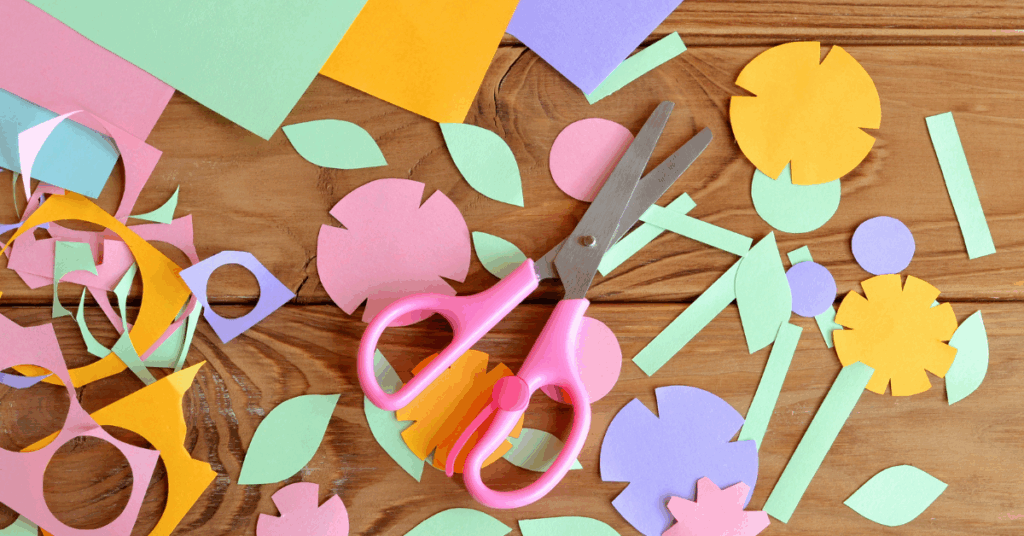
If you’re like me, you’re probably taking pictures of many of these opportunities and experiences, maybe texting the pictures to family or friends or posting on social media, but then they stay in your phone. Let’s print out some of those pictures and make a scrapbook. It doesn’t have to be in a fancy scrapbook binder from the craft store, but you can do that if you want to. I’d prefer doing something more hands-on, like the Girl Scout Daisy scrapbook my mom made.
Grab construction paper or cardstock, scissors, glue, ribbons, washi tape, stickers, and other decorative supplies. You’ll also need a hole punch, but binder rings are optional (you could use yarn or ribbon instead).
Print out your favorite photos, then you or the kids can cut them out and glue them to the paper. Ask your kids to caption them (you may need to give them some ideas). If one of your kids is writing, ask them to write the caption (you may need to write it again under theirs for translation). Then help your kids decorate the page. Create a cover and gather all of the pages at the end of the summer, hole punch, and put a binder ring, ribbon, yarn, or string through the holes. Now you’ll have a fun memory book that everyone contributed to and will love!
What’s Your Favorite Way to Keep Learning over the Summer?
I’ve shared some ideas that we’re planning to do this summer, but I’d love to hear about yours. Drop me a comment below with your favorite way to keep learning over the summer, and I just might share it in my newsletter to help others this summer!
Thanks for joining us today In Our Homeschool.
Disclosure: As an Amazon Associate I earn from qualifying purchases. This post may include affiliate links which means I may earn commissions for purchases made while using my link.
[…] feel like a race (or a rap battle). You’re just trying to teach your kids and give them the best opportunities for learning, but life gets in the way. Whether it’s a lack of sleep, stress from an overabundance of […]